terça-feira, 25 de outubro de 2011
We are made of Energy, not Matter
The new science also accepts that the universe, including us, is made up of energy, not matter. This is not actually new – it was posited by Socrates in Europe way back when, and by the ancient rishis in India thousands of years before that.
Socrates said that energy, or soul, is separate from matter, and that the universe is made of energy – pure energy which was there before man and other material things like the earth came along.
However at the end of the seventeenth century Newtonian physics became the corner-stone of science, and it was based on the theory that there is only matter and nothing else – the whole universe is a machine, made of matter, and so are we. Medical science is still stuck in the Newtonian concept, even though the rest of science has now moved on to quantum physics.
Quantum physics says that as you go deeper and deeper into the workings of the atom, you see that there is nothing there – just energy waves. It says an atom is actually an invisible force field, a kind of miniature tornado, which emits waves of electrical energy.
Those energy waves can be measured and their effects seen, but they are not a material reality, they have no substance because they are… well, just electricity. So science now embraces the idea that the universe is made of energy.
We are of course made up of atoms. And atoms are continuously giving off, and absorbing, light and energy, all the time. It doesn’t stop even when we sleep. Every cell in the body has its atoms lined up in such a way that it has a negative and a positive voltage, inside and outside. So every cell in our body is a miniature battery. Each cell has 1.4 volts of energy – not much, but when you multiply by the number of cells in your body (50 trillion) you get a total voltage of 700 trillion volts of electricity in your body. Pretty strong stuff! This is what the Chinese call ‘chi’, and is also the energy used in hands on healing. It can even be measured outside the body for a certain radius, depending on the sophistication of the instrument. And guess which has the stronger electro-magnetic energy field – your head or your heart? For the answer, see the end of this article.
Now here is another interesting fact which relates to our lives… Each atom has its own distinct frequency, or vibration. And quantum physicists study the energetic effect when atoms collide, not their ‘matter’. What they see is that when two atomic waves meet, they either meet in synch, creating a constructive or harmonious effect, or they meet out of synch, creating a destructive effect in which they annul each other.
Dr Bruce Lipton, a former professor of medicine at Harvard University and author of the best-selling ‘Your mind is greater than your genes’, explains that if you drop two equal pebbles at exactly the same time into water, from the same height, they will both produce the same wave ripples. Ie, their waves will be in harmony with each other, and when their ripples meet the combined effect will be an amplification of the wavelength – in other words the merged waves become more powerful. But if you drop the pebbles from different heights or a millisecond apart, then when the resultant waves meet they will not be in harmony and will cancel each other out – the waves become weaker. You can try this out for yourself.
Exactly the same thing happens when atomic energy waves meet – they either have a constructive effect (become more powerful) or a destructive effect. Now, we are all created of atomic energy waves, and because it is impossible to separate waves, the new science says what Osho was saying over forty years ago: we are all connected - our waves are always meeting and getting entangled in each other. Dr Lipton says the result of such invisible meetings we call ‘good vibes’ and ‘bad vibes’, depending on whether the other waves we meet are in synch with us or out of synch. No wonder so many people were ‘magnetically attracted’ to Osho and felt peaceful and harmonious in his presence.
This means it is important to be aware of whether you are in an environment where you are getting entangled in destructive energy waves or constructive energy waves. The cells that make up our bodies know instinctively what is nourishing and what is toxic (Lipton demonstrates this with cells in petri dishes which move away from toxic stuff and towards nourishing stuff). And in fact all animals and plants communicate through vibrations, ie by sensing whether the energy is good for them or not. But we have been taught not to listen to our feelings but instead to what people say. So we are not trained to use our ability to sense energy, even though we have it just as all plants and animals have.
Many of the meditations Osho describes in The Book of Secrets work with the senses, and are a great way to get back in touch with your natural instincts so you can have more awareness of when you are in a nourishing or a draining situation.
part of a series of articles on Science and Meditation by Anando published in the italian Osho Times
A related Osho exerpt
The first thing is that in this world, matter and consciousness are not two separate things. What we call matter is consciousness asleep, and what we know as consciousness is matter awakened. In reality matter and consciousness are not different; they are different manifestations of the same thing. Existence is one, and that one is godliness or brahman or whatsoever you want to call it. When that one is asleep it appears as matter, and when awake it is consciousness. So don’t treat matter and consciousness as separate entities; they are only utilitarian terms. They are not really different.
Even science has come to the conclusion that there is no such thing as matter. How amusing it is that fifty years ago Nietzsche declared that God is dead, and fifty years from now science will have to declare that God may or may not be dead but matter is certainly dead. As science goes deeper and deeper into matter it finds that matter is no more and only energy remains, only energy is.
What remains after the explosion or splitting of the atom is only particles of energy. And what we know as electrons, protons and neutrons are particles of electricity. In fact, it is not correct to call them particles, because particles imply matter. The scientists had to find a new word, which is quanta, which has a different connotation altogether. Quanta is both a particle and a wave. It is difficult to comprehend how something could be both a particle and a wave simultaneously, but quanta is both. Sometimes it behaves as a particle – which is matter; and sometimes it behaves as a wave – which is energy. Wave and energy are behaviors of the same quanta.
When science dug deep it found that only energy is, and when spirituality delved deep it found that only spirit or atman or soul is. And soul is energy. The time is just around the corner when a synthesis of science and religion will be achieved, and the distance that separates them will simply disappear. When the gap between matter and truth has proved to be false, the gap between science and religion cannot exist for long. If matter and consciousness are not two, how can religion and science be two? The separation of science and religion was dependent on the separation of matter and consciousness.
To me, only one is; two simply don’t exist. There is no place for duality; so the question of matter and consciousness does not arise. If you like the language of matter, you can say that everything is matter. And if you like the language of consciousness, you can say that everything is consciousness. I for one prefer the language of consciousness. Why do I prefer it? Because, in my view, one should always prefer the language of the higher, which has greater potential; one should not prefer the language of the lower, where potential is less and less.
Consciousness asleep is matter, and consciousness awakened is consciousness. All is consciousness.
http://www.lifetrainings.com/We-are-made-of-Energy-not-Matter.html
eSeries #1
We are made of pure energy
To be able to heal ourselves we need to understand that the universe is made up entirely of energy.
Everything happens within the energy field of the universe, and all that exists is part of it. In the last decades, science has demonstrated what many teachings of old cultures have been saying for thousands of years, namely, that what we call the physical world or the manifest universe is not made up of solid matter, but of energy as its basic component. The entire universe is made up entirely of that energy. Time and space are the dimensions along which that energy moves. Everything we know is composed of energy, either in the form of matter or of radiation. One of the most striking characteristics of energy is its ability to remain constant. Until now, the creation or destruction of energy could not be observed or proven. Thus, energy is the fundamental principle that gave origin to the universe, as it has all the needed qualities for this purpose. The things we see, smell, taste, hear and touch seem to be solid, liquid or gaseous, and also seem to be separate.
Quantum physics allows us to observe them minutely and in much more detail, in their atomic and subatomic levels. At those levels, what seems to be solid, liquid or gaseous matter becomes a group of ever smaller particles which are within other even smaller particles, and so on and so forth, until one realizes that everything is simply pure energy.
Quantum physics has discovered that even the most dense and solid element, when analyzed to an infinitesimal level, is not what it appears to be. Scientists subscribing to the new paradigm affirm that any visible or touchable element, when reduced to the level of its particles, is no more or no less than 99.99 percent empty space. The notion that an element or object has a given position, mass or speed is then the result of a false perception. In brief, any created object is an energy skein largely composed of empty space and of particles whose state cannot be determined, since they are constantly coming into existence or going out of it. Now, since we are part of that universe and are also made up of fluctuating and changing energy, everything within us - and around us - has that same quality of energy. We are part of an immense sea of energy that is constantly changing and pulsating between a state of existence and non-existence. If all is energy, and this energy has a different density according to the frequency in which it vibrates, then our thoughts, which are a relatively light and subtle form of energy, are a speedy and easily changeable energy-form. A stone, on the other hand, is made up of a relatively much more dense energy and is therefore less likely to be changed.
Exercise - We are all energy
Now, stop a while to perceive your body and the things surrounding it and become aware that your body is alive.
You don't need to move your legs or your arms to recognize that they are alive. Just feel their presence there. Gradually do the same with some other parts of your body.
The cells of your body have been alive all this time while you were reading and thinking. Your body has been alive and functioning since day one without you noticing it. Take your time to realize that there is an incredible intelligence that operates your body and the bodies of all creatures in creation.
Breathe deeply while you became more and more aware of this eternal situation. All is energy, manifested in different forms and in different states and frequencies. Close your eyes and imagine that you are submerged in a vast ocean of energy. Let yourself be part of it. Breathe, you are alive…
I hope that you enjoyed our first e-series. In the next to come, I will share with you how we can use this knowledge to balance our energies towards a more enjoyable, healthy life for ourselves and those around us.
In awareness and healing,
Luis Diaz
http://www.cellularmemory.org/mailers/eseries1.html

terça-feira, 6 de setembro de 2011
Sleep Deprivation
Sleepnet.com is dedicated to increasing the awareness of sleep deprivation. Try taking our Sleep Test and take a look at Sandman's Book Store.
Sleep deprivation is rampant. A large proportion of the problem is due to the high paced lifestyle causing the lack of time to get the sleep we need. The other reason people are so sleep deprived is due to sleep disorders. Most people are unaware, as are most physicians. Sleep was not taught during their medical training.
The cost in lost production, accidents, and human lives is astronomical. It is Sandman's dream to change this by educating the public as well as professionals in the medical field.
What is a Sleep Debt? When you do not get the sleep you need, you begin to build up a sleep debt. So if you are losing one hour of sleep a day during the week, by Friday you have a 5 hour sleep debt. We usually make up for this by sleeping in on Saturday and Sunday. It can make for a dangerous Friday night if the person driving has a sleep debt, especially if they have alcohol on top of it. Sleep debt is caused by not having enough time to get the sleep you need, or it is due to a sleep disorder which disrupts sleep.
How much sleep do we need? We need enough good quality sleep to feel alert during the day, especially during the afternoon. If you have a sleep debt you will very sleepy in the afternoon. Then our circadian pacemaker kicks in and makes us feel more alert early in the evening.
Drowsiness is Red Alert. If you are driving and you start to feel drowsy, get off the road. A quick nap may be all you need. Drowsiness is Red Alert is a phrase coined my William C. Dement Phd., M.D.
terça-feira, 30 de agosto de 2011
7 dicas simples para ser melhor pessoa
-
Ao contrário do que a maioria das pessoas julga, é possível melhorar a personalidade e tornares-te numa pessoa melhor.
Alguma vez sentiste que querias mudar algo em ti ou há coisas na tua vida que te fazem querer ser uma melhor pessoa? Por exemplo já deves ter sentido que devias ser um melhor profissional? Ou que aquela pessoa especial na tua vida faz-te querer ser um melhor parceiro?
Estes são os 7 conselhos fundamentais para te tornares numa melhor pessoa:
1. Tem opiniões
Não há nada mais chato do que falar com alguém que nunca tem uma opinião sobre nada. Uma conversa não tem graça se não tens argumentos para rebater os outros. Se, por outro lado, contrapões um ponto de vista ou uma opinião diferente, é mais interessante e estimulante para se estar socialmente (a não ser que sejas um cretino!).
2. Tenta estar sempre animado e vê o lado divertido da vida
Toda a gente gosta da companhia de alguém que nos faz rir, procura o lado divertido da vida. Não interessa a situação, há sempre um ponto de vista que deixará as pessoas à tua volta mais animadas.
3. Partilha o que sabes
Partilha com os outros aquilo que move a tua vida e te desafia, usando comunicação positiva que não julgue nem culpe ninguém. Ensinar e aprender deixa toda a gente alegre. Prepara a tua mensagem, fala com verdade e de forma inspiradora sempre que encontrares alguém que esteja disponível para te ouvir.
4. Come pela vida
Sempre que possível, escolhe alimentados baseados em verduras produzidos próximos de onde vives e que cresceram de forma biológica. Isto vai melhorar a tua saúde, o ambiente, a vida dos animais e o bem estar de todas as pessoas. E a tua personalidade beneficiará com isso!
5. Lê mais e expande os teus interesses
Quando mais leres e cultivares novos interesses, mais interessante serás para os outros. Quando conheceres novas pessoas isso dar-te-á a oportunidade de partilhar o que sabes e de trocarem pontos de vista. Costumas ler jornais ou revistas? Estar a par das notícias? Se não o costumas fazer, é uma boa forma de começar!
6. Sê tu próprio
A única coisa mais chata do que não teres opiniões é pretenderes ser alguém que não és. Moldares-te para encaixares nas outras pessoas, ou para ser aceite, acaba habitualmente mal para ti. O que tens de mais interessante é seres único, pelo que expressar isso mesmo é o melhor que pode acontecer. Tentar ser a cópia de alguém não vai ficar apenas mal, como revela falta de autenticidade.
7. Trata os outros com respeito
Ser honesto e verdadeiro vai trazer-te admiração, respeito e gratidão por parte dos outros. Nada melhora mais a personalidade de alguém do que a integridade e o respeito. E não te esqueças que é tanto respeito pelos outros como por tu próprio!
O desafio que te propomos é o seguinte:
Compromete-te, aqui e agora, a realmente fazer isto AMANHÃ, nem que seja apenas como uma experiência. Não tens de contar a ninguém , nem de recrutar outros para o fazer por ti. Apenas acorda de manhã com a atitude de que, não interessa o que aconteça durante o dia, vais dar à tua vida o melhor que tens para oferecer! Vais viver a tua vida de uma maneira que te vai fazer ser uma melhor pessoa. Sê feliz!

sábado, 28 de maio de 2011
Learn to Let Go and Outgrow What Troubles You
Learn to Let Go and Outgrow What Troubles You
by Guy Finley original link at http://www.guyfinley.org/free-content/content/1881
ED: Hello. I'm Dr. Ellen Dickstein and I'm here with inner life author, Guy Finley, to talk about letting go. Guy, some years ago you wrote a bestseller called The Secret of Letting Go that had a tremendous response all over the world, and you've just come out with a new book, Let Go and Live in the Now. There must be a lot of people all over the world who sense that they're hanging on to something that is hurting them, but they may not even be aware of what it is that they're hanging onto, what it is they need to let go of.
GF: It's true. We don't know. We think to ourselves, "When the time comes, I really need to let go of this person," "I need to let go of this career path that I've been on," "I need to let go of this pain that I've been carrying around." But those are always one step short of the real solution.
A nice feature of our spiritual work, of real interior work, is that gradually we begin to recognize that the experience we have of life outside of us is first and foremost a reflection and a result of an interior life, of something that is going on inside of us. We begin to recognize that the condition we blame for our unhappiness is never the cause of the unhappiness, but merely something that shows us a more persistent misunderstanding, a more persistent problem.
How many times have you let go of things, thinking that "when I get rid of this, I'm going to be different"? It's almost endless, isn't it? But the fact remains that we don't free ourselves. If I let go of you, then I get someone else.
ED: I let go of something and somehow I end up holding on to something else.
GF: That's right, and it's indicative of something that we need to understand at the root of letting go. The reason letting go is so hard, Ellen, is because what we have to let go of is not the person, the place, the position, the possession, but the sense of ourselves that is derived from thinking about that person, place, possession, or position. That's the real nut of it. I think my life depends upon something.
When I first meet the man or woman of my dreams, the new job -- whatever it is -- I'm glad that my life depends upon it. "This is the greatest thing that ever happened to me!"
ED: It gives meaning to my life.
GF: I have meaning now. I'm going to be a full, contented human being. But it isn't terribly long (and all of us know this very well), the person that we vest ourselves in, the sensation that we derive that was once full of happiness, begins to change and starts to become not so full of happiness. I start to become a little critical of the person. And gradually, the sensation of thinking they're super turns into a sensation of they're stupid. And, if you're honest about it, from super to stupid doesn't take that long, does it? Now I want to let you go, because it's too painful for me.
So finally that person goes away, but nothing changes, because it wasn't the person that was the issue. The issue is that the way our minds and our hearts work, this nature requires something outside of itself by which to know itself, believing that if it can find the right thing to know, my certainty, my confidence will be set, only to find out that I can't control the person or the thing outside of myself. As it changes, my sense of self is threatened, and now I want to let go, and I'm going to find someone better.
Real letting go begins with a kind of unraveling, a kind of uncovering where I begin to recognize that what I need to let go of is not the person or the place or the position, but this rather deep and pernicious sense of myself that believes without that person, without that condition, I will lose who I am.
You cannot lose who you are other than through thinking you're going to find yourself in someone or something outside of yourself. That's how we lose ourselves, which is the antithesis of the way the mind thinks about it. Can you see that? It's crazy.
ED: What you're saying is that what we have to let go of, on one level, is the identification we have with things outside of us, but on a deeper level, what we have to do is deal with this self that thinks it has to have something to identify with.
GF: Yes, It's so simple in some ways. If I had in my hand a porcupine, and I said, "Ellen, here's a porcupine." Would you reach out and grab the porcupine?
ED: Not if I saw what it was.
GF: Why?
ED: Because I know that it would hurt me.
GF: Because it would hurt me. I wouldn't have to think towards it. The nature of the porcupine is essentially to loose its quills on anything that touches it. Our nature tends to grab onto things that hurt us, believing it's how to heal us.
ED: We don't see it as something painful.
GF: I don't see it as something painful because I'm totally enamored with the sensation that I'm deriving from considering that person or that position.
If we could see how often it is that we pick up in our hand the thing that we say we wish we could let go of, and then when it's in our hand, we say "What's this doing in my hand?," if we could recognize that fact about our present nature, then we'd know that the self that picks up the problem, the worry, the grief, is not the same self that sits and goes, "No, no, no!"
So we need to connect that in our mind, and then we can begin to do the real interior work of letting go, because invariably it means that I'm going to have to be new, fresh, without a past... and in that moment, I am indeed starting over, because letting go and being new are the same thing.
And again, the reason is because within ourselves, there is a part of our nature that derives a very distinct sense of self from the attachments that it forms, so that the more in my mind I can see myself as belonging to a certain group, a certain school of thinking, or whatever it may be, then when that changes (naturally), I am at a loss, not because it's changed, but because I don't know who I am without what I was attached to that was secretly defining my sense of self and my purpose.
So from this attachment, we have to begin to recognize the process and realize, if I'm going to really learn to let go, it's going to require me understanding that I have to give up something of myself if I want to actually give up this pain, this problem that I have.
ED: We understand in our minds that it is wrong to hold on to things that are hurting us, but how do we translate this knowledge in our heads into actually doing it? How does it get from our head to our heart?
GF: I love that. How do we go from head to heart? When I was a boy, I had a pair of tennis shoes that I loved. My tennis shoes were the end of the world to me. They had died about a year before, but I still kept them. My mother couldn't stand these tennis shoes, and one day when I came home, they were gone...
The point is, when you're a child, you're attached to childish things. But we don't know that as adults, we're meant to outgrow childish things. The problem is that we don't recognize yet what it means to outgrow childish things. For instance, it's childish to be concerned about what anybody thinks about you. It's childish to be unhappy that you don't live in the kind of home that you think you're supposed to. It's not necessarily childish to want to live in a nice home, but it is childish to believe that who you are, the measure of your wealth, is determined by how you live and what people see you with. That's childish. It's childish to hold a grudge. I don't care what anybody on the earth ever did to you, it's childish to hate a human being. It's childish to fear.
"It's childish" means that we're intended to outgrow ourselves, all the time. What a nice thought it is. Every day it's possible that a person can see that what he or she formerly valued is no longer valuable to them, and it's a great process. It's a great purification process that this Intelligence that we live in has set up for us, because if we're awake and aware of ourselves, what we can't help but see is that to the degree that we're identified and attached to something is the degree to which we're punished by it.
We think to ourselves sometimes that the reason I'm in this pain is because I'm not attached enough, I'm not identified enough, meaning I need more of this image that I have of myself to make me happy, so I increase my efforts to get hold of what turns out to be a painful condition for myself.
So when we talk about these ideas, we talk about what it means to be aware of ourselves, to work on ourselves, to watch ourselves. And in that, we can do the wonderful work of starting to notice that if I'm suffering over something, the thing that I'm suffering over is not the thing but the sense of self that I am attached to through my imagined relationship with it. I know that's a lot of words, so I'll say it one more time simply: All we need to do to let go of something, Ellen, is to begin to realize that if I'm suffering from holding on to it, squeezing it tighter isn't going to help.
ED: When we really understand this, there isn't that struggle.
GF: To be aware of ourselves means in any given moment that we are conscious of our thoughts. Let's say I'm thinking, "Boy, I hope this interview comes out good." Whatever it is... the thought that comes along and tells you, "I hope this" or "I want that," promises in the very appearance in your mind that if you do what you picture, you're going to be in great shape. But what we can't see about ourselves in that moment is that the more we hold the idea of how things should be, the more we struggle with events as they are, and then wreck everything for the sake of what we wanted to take place around us.
So awareness of the moment includes awareness of the kind of thoughts that are going through me, the kind of emotions that I'm having, even my bodily sensations. All of that is what it means to watch and be aware of myself. And in that, I can learn to start valuing something else, because the part of me that is conscious of conflict in me is always greater than the conflict it's conscious of. So I need to place being conscious of myself above trying to prove myself to get rid of the fear I have of failing, of falling.
Letting go is a very whole movement. If it's not whole, it's not letting go; it's just substituting one desire for another.
ED: You said something earlier that I want to go into more deeply. You said that letting go is really the same as starting over.
GF: Let's do it right now. We have a little shadow following us that is unseen by us. We have something in us that's acting, and then we have something in us that's sitting there saying, "Cut! No good! Reschedule. Rewrite. Change the make-up." Something is always judging us, measuring us, so that our attention is never in the moment to what we're doing, but listening to these subtle off-stage hints and clues and poundings that come from this part of us that is always trying to decide how we did and what we need to do as a result of how we did. What a mess!
Starting over means I'm aware of that. It doesn't mean that I try to stop that. It means that I'm conscious of both this shadow -- this part of me that is measuring me -- and as I'm watching it, by the very fact that I'm aware of it, I'm letting go of it because I'm not identifying with its findings. So that's starting over, isn't it? It's fresh. I don't have to carry one thing with me.
ED: When we're looking at what we did and going over those findings, then we're not going forward at all. We're just continually living over and over in our past.
GF: If you had a suitcase, Ellen, and everywhere you went, you took your suitcase, and wherever you sat that suitcase down, it unzipped itself and out popped a large hammer and hit you on the head...
ED: I have that suitcase!
GF: I rest my case. That's what human beings do. A part of us we carry with us, everywhere we go. We're always thinking back on it, looking upon it, asking it, being measured by it, and all the time, whatever we do, without exception, we get a clop on the head by the content of our own past. The point is that a person doesn't have a painful problem without the past that they consult in order to find their future or define their present.
Now, a person says, "Well, what am I supposed to do?" Be in the present moment. Work to bring yourself back to now. What is now? Now is the awareness of the fact of that suitcase. Look, there's nothing wrong with that suitcase, because I need to know how to get home for instance. I need to know how many beans go in the casserole. These are practical things. But when what is practical turns out to be something that punishes me, it ceases to be practical and becomes personal. Our true life of letting go is not personal; it is an impersonal relationship with the present moment.
ED: There is something that you say over and over again in your book, The Secret of Letting Go, and that is "You are not your problem. You are not the event. You are not the fear." What does that mean?
GF: Did you know that since we sat down here, neither one of us have in us the same things that we did when we sat down? Not the same air, not even the same cells. The same blood isn't in the same place. Not one thing is the same. Even this chair. Everything, Ellen, is in constant change. We don't see constant change because our mind only knows itself and ourselves through images it creates, static images by which I measure myself and know myself.
When I say that you are not these things, what it really means is that your true nature is not contained or confined by any quality that our mind (that is part of that nature) defines us by.
Here is the problem with letting go. To truly let go, one has to become no one, and we don't want to be no one. We want to be someone who is no one. That's the fact. To be no one like I'm talking about is to be all things, is to be one with that which is all -- not as an intellectual exercise, not as a fantasy, but as a true reflection of our work, of dropping what comes up inside of us to be in the present moment. And when you're part of the present moment, you're part of the whole of the movement of the present moment, and there's no pain in that movement. There's change, but that change only becomes pain when one identifies with something in that movement that runs against their suitcase that is sitting at their feet.
ED: This reminds me of something you said in a recent talk about starting over. You said that starting over is to enter the unknown.
GF: Yes. That's what it is. To be new means to live in an unknown moment. The beauty of that, in its truth, is that the unknown moment does not mean scary, bad, empty, lonely. It means newly becoming.
ED: Why are we so afraid?
GF: Because there is a part of us that names that unknown moment. If I'm afraid of an unknown moment, is it unknown to me? I've filled it with something, haven't I? It's like a bad donut with an evil cream in it. I take a bite of it and think, "How did that get there?" And I stuffed it!
ED: So, would you say that a big part of letting go is to realize that there was never anything real to let go of?
GF: In one respect, yes. I'd say that part of our journey, part of the discovery process, part of our awakening is intimately connected with the idea of realizing that who we are, our true nature, can't be defined. And if it can't be defined, then that means anything in me that searches for myself or a sense of it through something that I've defined as being necessary, promising, powerful (or debilitating for that matter), that anything like that belongs to a surreptitious nature in me, a false self whose purpose is to produce a kind of constant pain that in turn gets me to search for pleasure that becomes the new attachment, the new identification that drives that circle of self through that pain. We see all of that for what it is and then drop it. Let it go. Then we begin to live as we're intended to.
This is the point of all the work that I do, in essence. I believe that the whole of life is a preparation for letting go. Said differently, that the whole of life is a preparation for Love, because when we finally begin to let go, what we discover is that we have always had a nature of love in us that didn't need something outside of us by which to give us our sense of self. Not that we don't have a relationship with another human being -- we learn about ourselves and this true nature and this false nature through relationships with one another. But when I name something outside of myself as being the secret source of myself, I have set myself up to suffer, no matter how else I cut it.
ED: So this has really taken us into a new place, because in order to let go, from what you said, I have to have a real self-honesty and a willingness to look inside myself.
GF: That certainly is part of it. Real letting go comes with reaching the point where I just can't hold on anymore. Anybody who has ever been through any kind of crisis and finally lets go, realizes it wasn't the thing that they let go of, it was their attachment to it, and the sense of themselves they felt they would lose forever by such a change. Again, why do I cling to begin with?
ED: Because I don't think I will have anything without that.
GF: That's right. I want to be someone. I want to feel like I'm someone. I want to fill myself with something. But when I finally (however long it takes) recognize that I keep putting things into this basket called myself, and no matter what I put in this basket, the bottom line is that the basket doesn't seem to hold anything, then I've got to go find something new to put in the basket.
It's that gradual recognition of how absolutely wasteful its been, how many enemies I've made, how many people I've hurt, and how much damage I've done to the planet itself, that begins to form in a person -- not an intelligence or strength by which they take an act of letting go, but a certain kind of understanding that it's impossible to continue being someone who believes that I can hold my life by holding something in my hand. It doesn't work. And one dies to the sense of self that is born out of blaming, judging, hoping... the whole process relative to divided thinking begins to fade when one sees that what one is vesting oneself in is not real but is merely an image or a projection of himself.
When those opposites begin to collapse, when one sees all of that, Ellen, one realizes, "I thought something terrible would happen to me, but it didn't. I thought I was going to die, but I didn't." And in that experience, as accidental as it is for most of us, begins the seed of something new where I am willing to go through that maybe a little sooner, test the waters a little bit earlier to see what will happen if I don't do what I've always done. Then a person grows in understanding. That wisdom grows, and it is that wisdom in the long run that actually helps a person through all of this.
ED: So this implies that if we let go of the small life that we have created with our thoughts, there is a larger life that we enter.
GF: Exactly. Let's say that I have someone hurt me badly and I have a resentment. As long as I hold that resentment and believe that the answer to the pain I feel has to do with getting you to do something or letting go of a situation that I believe you're somehow involved in and that will change the way I feel, what I'm really living in is the world of that little thought, that negative state. When I live inside of a negative state, that negative state tells me who I am, what I can do, what my choices are, how to handle things.
Little by little, we recognize that I'm not intended to be a captive of this condition. I know I'm not intended to be a captive of this relationship. No one sets out to be a captive of a relationship, but we wind up a captive of relationships. No one sets out to be a captive of their best ambitions, but we wind up captives of our best ambitions. Why? Because the content, all of the things that are vested in that idea that I have, I become dependent on for my sense of myself. As I see that, I want nothing to do with it. I'm willing to let go of that, and I'm willing to suffer the sense of loss of myself that comes with that. Then things change. We change nothing by changing our exterior circumstances.
ED: When I was thinking about the topic of letting go, I came upon this quote from a recent talk that you gave, and I saw a connection. You said, "You cannot be safe and have a spiritual life," which means that we have to let go if we want to have the deeper spiritual life that we long for.
GF: Yes. The sense of safety that we presently have is always connected to an idea, a condition outside of ourselves. I am this condition as long as that condition persists. I will fight to keep that condition in place, because by keeping that condition in place, I stay secure. The self that stays secure because of keeping a condition in place, itself not only isn't secure, but is a captive of the condition that it's trying to keep that way, so that while a person may be safe, they're dying, because they're cut off from life. They live in a little world of opposites, of me and the image that I hold in my mind. And while it seems safe, it strangles the spirit.
So we have to recognize the fact of something like that and then based on our understanding, Ellen, as spiritual aspirants, men and women who want to have a different life, a life centered in God, in Truth, we have to be willing to risk everything for the purpose of discovering what is true and what is not. You find a person who will not risk things for the purpose of discovering what is true, and you find a person who will be ringed in for the rest of their life by the falsehoods that are connected with the idea they have to have certain things to be who they are, and they're as good as dead.
ED: We want the familiar. That's what makes us feel safe, even though it could be something terribly painful.
GF: It's such a paradox, Ellen. It's so contradictory. Here's what you're saying, "I've gotta be me."
ED: Even if it kills me.
GF: "I've gotta be me," but I want to do everything I can to change me because I hate me... but I don't want to change anything about me unless what I'm changing turns out to be what I want to be me! Well, that's nuts, isn't it?
ED: Yes. So we're just hanging on to thoughts about ourselves, and in that we are preventing ourselves from experiencing the full life that we're supposed to know.
GF: Right here, right now, come back to yourself. The present moment, the Now is God's life, the life of Truth, the life of Light. Everything that ever was, or ever will be, everything that is wonderful, and everything that is dark, all is in this moment. I cannot know my true nature apart from knowing this moment. And as long as I live outside of this moment, which is all thought does by creating what was, what will be, I am isolated, and not only isolated, but connected to all of the objects that I form in my mind in that time. It's hard for a person to understand. That's why we have to go through so much suffering, it seems, to finally begin to recognize, "You know what? It's all right just to be here. I don't have to find a sense of myself anywhere outside of what this moment provides as it shows me what I need to see."
ED: I can actually start the process of letting go right now.
GF: This very moment. Learn to watch, be as awake as you can, and letting go comes naturally.
ED: Thank you, Guy. This has been a Fireside Chat with best-selling inner life author, Guy Finley. I'm Dr. Ellen Dickstein. Thanks for joining us.
by Guy Finley original link at http://www.guyfinley.org/free-content/content/1881
ED: Hello. I'm Dr. Ellen Dickstein and I'm here with inner life author, Guy Finley, to talk about letting go. Guy, some years ago you wrote a bestseller called The Secret of Letting Go that had a tremendous response all over the world, and you've just come out with a new book, Let Go and Live in the Now. There must be a lot of people all over the world who sense that they're hanging on to something that is hurting them, but they may not even be aware of what it is that they're hanging onto, what it is they need to let go of.
GF: It's true. We don't know. We think to ourselves, "When the time comes, I really need to let go of this person," "I need to let go of this career path that I've been on," "I need to let go of this pain that I've been carrying around." But those are always one step short of the real solution.
A nice feature of our spiritual work, of real interior work, is that gradually we begin to recognize that the experience we have of life outside of us is first and foremost a reflection and a result of an interior life, of something that is going on inside of us. We begin to recognize that the condition we blame for our unhappiness is never the cause of the unhappiness, but merely something that shows us a more persistent misunderstanding, a more persistent problem.
How many times have you let go of things, thinking that "when I get rid of this, I'm going to be different"? It's almost endless, isn't it? But the fact remains that we don't free ourselves. If I let go of you, then I get someone else.
ED: I let go of something and somehow I end up holding on to something else.
GF: That's right, and it's indicative of something that we need to understand at the root of letting go. The reason letting go is so hard, Ellen, is because what we have to let go of is not the person, the place, the position, the possession, but the sense of ourselves that is derived from thinking about that person, place, possession, or position. That's the real nut of it. I think my life depends upon something.
When I first meet the man or woman of my dreams, the new job -- whatever it is -- I'm glad that my life depends upon it. "This is the greatest thing that ever happened to me!"
ED: It gives meaning to my life.
GF: I have meaning now. I'm going to be a full, contented human being. But it isn't terribly long (and all of us know this very well), the person that we vest ourselves in, the sensation that we derive that was once full of happiness, begins to change and starts to become not so full of happiness. I start to become a little critical of the person. And gradually, the sensation of thinking they're super turns into a sensation of they're stupid. And, if you're honest about it, from super to stupid doesn't take that long, does it? Now I want to let you go, because it's too painful for me.
So finally that person goes away, but nothing changes, because it wasn't the person that was the issue. The issue is that the way our minds and our hearts work, this nature requires something outside of itself by which to know itself, believing that if it can find the right thing to know, my certainty, my confidence will be set, only to find out that I can't control the person or the thing outside of myself. As it changes, my sense of self is threatened, and now I want to let go, and I'm going to find someone better.
Real letting go begins with a kind of unraveling, a kind of uncovering where I begin to recognize that what I need to let go of is not the person or the place or the position, but this rather deep and pernicious sense of myself that believes without that person, without that condition, I will lose who I am.
You cannot lose who you are other than through thinking you're going to find yourself in someone or something outside of yourself. That's how we lose ourselves, which is the antithesis of the way the mind thinks about it. Can you see that? It's crazy.
ED: What you're saying is that what we have to let go of, on one level, is the identification we have with things outside of us, but on a deeper level, what we have to do is deal with this self that thinks it has to have something to identify with.
GF: Yes, It's so simple in some ways. If I had in my hand a porcupine, and I said, "Ellen, here's a porcupine." Would you reach out and grab the porcupine?
ED: Not if I saw what it was.
GF: Why?
ED: Because I know that it would hurt me.
GF: Because it would hurt me. I wouldn't have to think towards it. The nature of the porcupine is essentially to loose its quills on anything that touches it. Our nature tends to grab onto things that hurt us, believing it's how to heal us.
ED: We don't see it as something painful.
GF: I don't see it as something painful because I'm totally enamored with the sensation that I'm deriving from considering that person or that position.
If we could see how often it is that we pick up in our hand the thing that we say we wish we could let go of, and then when it's in our hand, we say "What's this doing in my hand?," if we could recognize that fact about our present nature, then we'd know that the self that picks up the problem, the worry, the grief, is not the same self that sits and goes, "No, no, no!"
So we need to connect that in our mind, and then we can begin to do the real interior work of letting go, because invariably it means that I'm going to have to be new, fresh, without a past... and in that moment, I am indeed starting over, because letting go and being new are the same thing.
And again, the reason is because within ourselves, there is a part of our nature that derives a very distinct sense of self from the attachments that it forms, so that the more in my mind I can see myself as belonging to a certain group, a certain school of thinking, or whatever it may be, then when that changes (naturally), I am at a loss, not because it's changed, but because I don't know who I am without what I was attached to that was secretly defining my sense of self and my purpose.
So from this attachment, we have to begin to recognize the process and realize, if I'm going to really learn to let go, it's going to require me understanding that I have to give up something of myself if I want to actually give up this pain, this problem that I have.
ED: We understand in our minds that it is wrong to hold on to things that are hurting us, but how do we translate this knowledge in our heads into actually doing it? How does it get from our head to our heart?
GF: I love that. How do we go from head to heart? When I was a boy, I had a pair of tennis shoes that I loved. My tennis shoes were the end of the world to me. They had died about a year before, but I still kept them. My mother couldn't stand these tennis shoes, and one day when I came home, they were gone...
The point is, when you're a child, you're attached to childish things. But we don't know that as adults, we're meant to outgrow childish things. The problem is that we don't recognize yet what it means to outgrow childish things. For instance, it's childish to be concerned about what anybody thinks about you. It's childish to be unhappy that you don't live in the kind of home that you think you're supposed to. It's not necessarily childish to want to live in a nice home, but it is childish to believe that who you are, the measure of your wealth, is determined by how you live and what people see you with. That's childish. It's childish to hold a grudge. I don't care what anybody on the earth ever did to you, it's childish to hate a human being. It's childish to fear.
"It's childish" means that we're intended to outgrow ourselves, all the time. What a nice thought it is. Every day it's possible that a person can see that what he or she formerly valued is no longer valuable to them, and it's a great process. It's a great purification process that this Intelligence that we live in has set up for us, because if we're awake and aware of ourselves, what we can't help but see is that to the degree that we're identified and attached to something is the degree to which we're punished by it.
We think to ourselves sometimes that the reason I'm in this pain is because I'm not attached enough, I'm not identified enough, meaning I need more of this image that I have of myself to make me happy, so I increase my efforts to get hold of what turns out to be a painful condition for myself.
So when we talk about these ideas, we talk about what it means to be aware of ourselves, to work on ourselves, to watch ourselves. And in that, we can do the wonderful work of starting to notice that if I'm suffering over something, the thing that I'm suffering over is not the thing but the sense of self that I am attached to through my imagined relationship with it. I know that's a lot of words, so I'll say it one more time simply: All we need to do to let go of something, Ellen, is to begin to realize that if I'm suffering from holding on to it, squeezing it tighter isn't going to help.
ED: When we really understand this, there isn't that struggle.
GF: To be aware of ourselves means in any given moment that we are conscious of our thoughts. Let's say I'm thinking, "Boy, I hope this interview comes out good." Whatever it is... the thought that comes along and tells you, "I hope this" or "I want that," promises in the very appearance in your mind that if you do what you picture, you're going to be in great shape. But what we can't see about ourselves in that moment is that the more we hold the idea of how things should be, the more we struggle with events as they are, and then wreck everything for the sake of what we wanted to take place around us.
So awareness of the moment includes awareness of the kind of thoughts that are going through me, the kind of emotions that I'm having, even my bodily sensations. All of that is what it means to watch and be aware of myself. And in that, I can learn to start valuing something else, because the part of me that is conscious of conflict in me is always greater than the conflict it's conscious of. So I need to place being conscious of myself above trying to prove myself to get rid of the fear I have of failing, of falling.
Letting go is a very whole movement. If it's not whole, it's not letting go; it's just substituting one desire for another.
ED: You said something earlier that I want to go into more deeply. You said that letting go is really the same as starting over.
GF: Let's do it right now. We have a little shadow following us that is unseen by us. We have something in us that's acting, and then we have something in us that's sitting there saying, "Cut! No good! Reschedule. Rewrite. Change the make-up." Something is always judging us, measuring us, so that our attention is never in the moment to what we're doing, but listening to these subtle off-stage hints and clues and poundings that come from this part of us that is always trying to decide how we did and what we need to do as a result of how we did. What a mess!
Starting over means I'm aware of that. It doesn't mean that I try to stop that. It means that I'm conscious of both this shadow -- this part of me that is measuring me -- and as I'm watching it, by the very fact that I'm aware of it, I'm letting go of it because I'm not identifying with its findings. So that's starting over, isn't it? It's fresh. I don't have to carry one thing with me.
ED: When we're looking at what we did and going over those findings, then we're not going forward at all. We're just continually living over and over in our past.
GF: If you had a suitcase, Ellen, and everywhere you went, you took your suitcase, and wherever you sat that suitcase down, it unzipped itself and out popped a large hammer and hit you on the head...
ED: I have that suitcase!
GF: I rest my case. That's what human beings do. A part of us we carry with us, everywhere we go. We're always thinking back on it, looking upon it, asking it, being measured by it, and all the time, whatever we do, without exception, we get a clop on the head by the content of our own past. The point is that a person doesn't have a painful problem without the past that they consult in order to find their future or define their present.
Now, a person says, "Well, what am I supposed to do?" Be in the present moment. Work to bring yourself back to now. What is now? Now is the awareness of the fact of that suitcase. Look, there's nothing wrong with that suitcase, because I need to know how to get home for instance. I need to know how many beans go in the casserole. These are practical things. But when what is practical turns out to be something that punishes me, it ceases to be practical and becomes personal. Our true life of letting go is not personal; it is an impersonal relationship with the present moment.
ED: There is something that you say over and over again in your book, The Secret of Letting Go, and that is "You are not your problem. You are not the event. You are not the fear." What does that mean?
GF: Did you know that since we sat down here, neither one of us have in us the same things that we did when we sat down? Not the same air, not even the same cells. The same blood isn't in the same place. Not one thing is the same. Even this chair. Everything, Ellen, is in constant change. We don't see constant change because our mind only knows itself and ourselves through images it creates, static images by which I measure myself and know myself.
When I say that you are not these things, what it really means is that your true nature is not contained or confined by any quality that our mind (that is part of that nature) defines us by.
Here is the problem with letting go. To truly let go, one has to become no one, and we don't want to be no one. We want to be someone who is no one. That's the fact. To be no one like I'm talking about is to be all things, is to be one with that which is all -- not as an intellectual exercise, not as a fantasy, but as a true reflection of our work, of dropping what comes up inside of us to be in the present moment. And when you're part of the present moment, you're part of the whole of the movement of the present moment, and there's no pain in that movement. There's change, but that change only becomes pain when one identifies with something in that movement that runs against their suitcase that is sitting at their feet.
ED: This reminds me of something you said in a recent talk about starting over. You said that starting over is to enter the unknown.
GF: Yes. That's what it is. To be new means to live in an unknown moment. The beauty of that, in its truth, is that the unknown moment does not mean scary, bad, empty, lonely. It means newly becoming.
ED: Why are we so afraid?
GF: Because there is a part of us that names that unknown moment. If I'm afraid of an unknown moment, is it unknown to me? I've filled it with something, haven't I? It's like a bad donut with an evil cream in it. I take a bite of it and think, "How did that get there?" And I stuffed it!
ED: So, would you say that a big part of letting go is to realize that there was never anything real to let go of?
GF: In one respect, yes. I'd say that part of our journey, part of the discovery process, part of our awakening is intimately connected with the idea of realizing that who we are, our true nature, can't be defined. And if it can't be defined, then that means anything in me that searches for myself or a sense of it through something that I've defined as being necessary, promising, powerful (or debilitating for that matter), that anything like that belongs to a surreptitious nature in me, a false self whose purpose is to produce a kind of constant pain that in turn gets me to search for pleasure that becomes the new attachment, the new identification that drives that circle of self through that pain. We see all of that for what it is and then drop it. Let it go. Then we begin to live as we're intended to.
This is the point of all the work that I do, in essence. I believe that the whole of life is a preparation for letting go. Said differently, that the whole of life is a preparation for Love, because when we finally begin to let go, what we discover is that we have always had a nature of love in us that didn't need something outside of us by which to give us our sense of self. Not that we don't have a relationship with another human being -- we learn about ourselves and this true nature and this false nature through relationships with one another. But when I name something outside of myself as being the secret source of myself, I have set myself up to suffer, no matter how else I cut it.
ED: So this has really taken us into a new place, because in order to let go, from what you said, I have to have a real self-honesty and a willingness to look inside myself.
GF: That certainly is part of it. Real letting go comes with reaching the point where I just can't hold on anymore. Anybody who has ever been through any kind of crisis and finally lets go, realizes it wasn't the thing that they let go of, it was their attachment to it, and the sense of themselves they felt they would lose forever by such a change. Again, why do I cling to begin with?
ED: Because I don't think I will have anything without that.
GF: That's right. I want to be someone. I want to feel like I'm someone. I want to fill myself with something. But when I finally (however long it takes) recognize that I keep putting things into this basket called myself, and no matter what I put in this basket, the bottom line is that the basket doesn't seem to hold anything, then I've got to go find something new to put in the basket.
It's that gradual recognition of how absolutely wasteful its been, how many enemies I've made, how many people I've hurt, and how much damage I've done to the planet itself, that begins to form in a person -- not an intelligence or strength by which they take an act of letting go, but a certain kind of understanding that it's impossible to continue being someone who believes that I can hold my life by holding something in my hand. It doesn't work. And one dies to the sense of self that is born out of blaming, judging, hoping... the whole process relative to divided thinking begins to fade when one sees that what one is vesting oneself in is not real but is merely an image or a projection of himself.
When those opposites begin to collapse, when one sees all of that, Ellen, one realizes, "I thought something terrible would happen to me, but it didn't. I thought I was going to die, but I didn't." And in that experience, as accidental as it is for most of us, begins the seed of something new where I am willing to go through that maybe a little sooner, test the waters a little bit earlier to see what will happen if I don't do what I've always done. Then a person grows in understanding. That wisdom grows, and it is that wisdom in the long run that actually helps a person through all of this.
ED: So this implies that if we let go of the small life that we have created with our thoughts, there is a larger life that we enter.
GF: Exactly. Let's say that I have someone hurt me badly and I have a resentment. As long as I hold that resentment and believe that the answer to the pain I feel has to do with getting you to do something or letting go of a situation that I believe you're somehow involved in and that will change the way I feel, what I'm really living in is the world of that little thought, that negative state. When I live inside of a negative state, that negative state tells me who I am, what I can do, what my choices are, how to handle things.
Little by little, we recognize that I'm not intended to be a captive of this condition. I know I'm not intended to be a captive of this relationship. No one sets out to be a captive of a relationship, but we wind up a captive of relationships. No one sets out to be a captive of their best ambitions, but we wind up captives of our best ambitions. Why? Because the content, all of the things that are vested in that idea that I have, I become dependent on for my sense of myself. As I see that, I want nothing to do with it. I'm willing to let go of that, and I'm willing to suffer the sense of loss of myself that comes with that. Then things change. We change nothing by changing our exterior circumstances.
ED: When I was thinking about the topic of letting go, I came upon this quote from a recent talk that you gave, and I saw a connection. You said, "You cannot be safe and have a spiritual life," which means that we have to let go if we want to have the deeper spiritual life that we long for.
GF: Yes. The sense of safety that we presently have is always connected to an idea, a condition outside of ourselves. I am this condition as long as that condition persists. I will fight to keep that condition in place, because by keeping that condition in place, I stay secure. The self that stays secure because of keeping a condition in place, itself not only isn't secure, but is a captive of the condition that it's trying to keep that way, so that while a person may be safe, they're dying, because they're cut off from life. They live in a little world of opposites, of me and the image that I hold in my mind. And while it seems safe, it strangles the spirit.
So we have to recognize the fact of something like that and then based on our understanding, Ellen, as spiritual aspirants, men and women who want to have a different life, a life centered in God, in Truth, we have to be willing to risk everything for the purpose of discovering what is true and what is not. You find a person who will not risk things for the purpose of discovering what is true, and you find a person who will be ringed in for the rest of their life by the falsehoods that are connected with the idea they have to have certain things to be who they are, and they're as good as dead.
ED: We want the familiar. That's what makes us feel safe, even though it could be something terribly painful.
GF: It's such a paradox, Ellen. It's so contradictory. Here's what you're saying, "I've gotta be me."
ED: Even if it kills me.
GF: "I've gotta be me," but I want to do everything I can to change me because I hate me... but I don't want to change anything about me unless what I'm changing turns out to be what I want to be me! Well, that's nuts, isn't it?
ED: Yes. So we're just hanging on to thoughts about ourselves, and in that we are preventing ourselves from experiencing the full life that we're supposed to know.
GF: Right here, right now, come back to yourself. The present moment, the Now is God's life, the life of Truth, the life of Light. Everything that ever was, or ever will be, everything that is wonderful, and everything that is dark, all is in this moment. I cannot know my true nature apart from knowing this moment. And as long as I live outside of this moment, which is all thought does by creating what was, what will be, I am isolated, and not only isolated, but connected to all of the objects that I form in my mind in that time. It's hard for a person to understand. That's why we have to go through so much suffering, it seems, to finally begin to recognize, "You know what? It's all right just to be here. I don't have to find a sense of myself anywhere outside of what this moment provides as it shows me what I need to see."
ED: I can actually start the process of letting go right now.
GF: This very moment. Learn to watch, be as awake as you can, and letting go comes naturally.
ED: Thank you, Guy. This has been a Fireside Chat with best-selling inner life author, Guy Finley. I'm Dr. Ellen Dickstein. Thanks for joining us.
sexta-feira, 10 de dezembro de 2010
Zoroastrismo
Zoroastrismo
O zoroastrismo, também conhecido como masdeísmo, apareceu na antiga Pérsia, actual Irã, no século VI a.C. e sua origem está directamente ligada ao contexto social da época, onde existiam três classes: A dos chefes e sacerdotes, a dos guerreiros e a dos criados. Esta divisão reflectia-se na religião onde cada casta possui seus deuses, cuja importância era proporcional à camada social. Zoroastro ou Zaratustra, fundador do zoroastrismo, ao observar esta realidade, sentiu-se insatisfeito com a situação social do seu país e com as posições filosóficas vigentes, resolveu então iniciar uma busca de respostas para suas indagações. Através de suas observações e estudos, Zoroastro concluiu que o mundo é um local bom, criado por um Deus bom, generoso e amoroso, cujo desejo é que todos os homens sejam felizes. Tendo chegado a estas conclusões Zaratustra, então com 40 anos, desenvolveu a nova religião que iria substituir o politeísmo praticado e que possuía um lado filosófico, mas também um carácter prático para a vida das pessoas.
Os princípios do zoroastrismo consistem na existência de um deus único (Ahura Mazda ou Ormuz Mazda), sábio, criador e guia de tudo, que não tem preferências, que acolhe a todos com o mesmo carinho. Ahura Mazda é ajudado por seis espíritos Amesas Spenta (Imortais Sagrados), que o auxiliam na realização de seus desígnios: Vohu-Mano (Espírito do Bem), Asa-Vahista (Retidão Suprema), Khsathra Varya (Governo Ideal), Spenta Armaiti (Piedade Sagrada), Haurvatat (Perfeição) e Ameretat (Imortalidade), que Juntos travam luta permanente contra o princípio do mal, Angra Mainyu (ou Ahriman), por sua vez acompanhado de entidades demoníacas: o mau pensamento, a mentira, a rebelião, o mau governo, a doença e a morte que procuram corromper os homens trazendo o mal para o mundo. O símbolo de Ormuz é o fogo, estando presente em todas as cerimónias como representação viva do deus maior.
Ao contrário de outras religiões, o zoroastrismo não atribui grande importância à fé ou a crença, o fundamental são as boas atitudes e os bons pensamentos, o homem é o responsável pelos seus actos e pelas suas escolhas e colherá o fruto delas, cabe a cada um lutar contra os maus pensamentos e as más acções, trabalho este que nunca está concluído, é um esforço diário e constante. Só através deste esforço o homem pode alcançar uma vida feliz. O zoroastrismo desenvolveu uma avançada visão metafísica, onde os pensamentos geram realidade. Quando o homem nutre bons pensamentos o universo passa a conspirar a seu favor, quando elabora maus pensamentos, isola-se e enfrenta toda sorte de dissabores.
Os ensinamentos desta religião estão contidos nas escrituras sagradas chamadas de Zend Avesta, que são compostas de três partes: a primeira chama-se Vendida e contém as leis religiosas e histórias míticas antigas; a segunda chama-se Visparad e a terceira Yasna, segundo a tradição este livro contém a conversa entre Zaratustra e Ormuz.
O zoroastrismo é uma religião positivista, ética, baseada no conhecimento e na responsabilidade individual, seus ensinamentos estabelecem a prática das boas acções, a pureza de pensamentos, palavras e obras, a pureza de coração, a verdade, a caridade, a bondade, a humildade, o respeito, a amizade, a felicidade.
As principais características deste sistema religioso são:
- Dualismo;
- Crença na imortalidade da alma, na vinda de um messias, na ressurreição dos mortos, no juízo final;
- Condenação da cobiça, calúnia, usura, ascetismo, jejum;
- Divindades não representadas em escultura;
- Inexistência de templos;
Actualmente o oriente médio foi convertido ao islamismo, entretanto ainda há seguidores do zoroastrismo, cujos princípios apesar de terem sido estabelecidos há milhares de anos, mostram-se bastante atuais, coincidindo com muitas ideias vigentes em vários sistemas religiosos modernos.
Fontes:
Zoroastrismo - Encyclopaedia Britannica do Brasil Publicações Ltda
Challaye, Félicien. As Grandes Religiões. (1998) IBRASA.
sábado, 27 de novembro de 2010
Sobre as ondinas, sereias, ninfas
Ondinas - Vivem nos riachos, nas fontes, no orvalho das folhas sobre as águas e nos musgos. São reconhecidos por terem o poder de retirar das águas a energia suficiente p/ a sua luminosidade, o que permite ao homem, por muitas vezes, percebê-los em forma de um leve "facho de luz".
Sereias - São elementais conhecidos como metade mulher e metade peixe, delicados e sutis, com o poder de encantar e hipnotizar o homem com seu canto.
Ninfas - São elementais que se assemelham às ondinas, porém um pouco menores e de água doce. Apresentam-se geralmente com tons azulados, e como as ondinas maiores, emitem suas vibrações através de sua luminosidade. A diferença básica entre uma e outra, encontra-se na docilidade e beleza das ninfas, que parecem "voar" levitando sobre as águas em um balé singular.
Ninfas:
Todas, descendem de Geia. Da união de Oceano e Tétis nasceram as Oceânidas, ninfas dos mares; Nereu (o velho do mar) uniu-se a Doris e nasceram as Nereias, também ninfas marítimas; os Rios, unidos a elementos vários, geraram outras ninfas, como as Potâmidas, ninfas dos rios; Náiades, ninfas dos ribeiros e riachos; Crenéias e Pegéias, ninfas das fontes e nascentes; e as Limneidas, ninfas dos lagos e lagoas.
Estas eram as Ninfas que habitavam o elemento aquático e faziam parte frequentemente do cortejo de Hera e Artemis.
Desconhecido As ninfas da terra propriamente dita são as Napéias, que habitavam vales e selvas; as Oréadas, ninfas das montanhas e colinas; as Dríadas e Hamadríadas, ninfas das árvores em geral e especificamente do carvalho (árvore consagrada a Zeus). Há uma distinção entre Dríadas "carvalho" e Hamadríadas, "ao mesmo tempo". Quer dizer, as Dríadas são Ninfas, cuja vida depende da vida do carvalho e as Hamadríadas são as que "fazem corpo com o carvalho", isto é, estão incorporadas a esta árvore, já nascem com ela.
Em síntese temos os seguintes tipos de Ninfas:
Oceânidas (Ninfas do alto-mar) - Nereidas (ninfas dos mares internos) - Potâmidas (ninfas dos rios) - Náiades (ninfas dos ribeiros e riachos) - Crenéias (Ninfas das Fontes) - Pegéias (ninfas das nascentes) - Limneidas (ninfas dos lagos e lagoas) - Napéias (ninfas dos vales e selvas) - Oréadas (ninfas das montanhas e colinas) - Dríadas (ninfas das árvores e particularmente dos carvalhos) - Hamadríadas (ninfas dos carvalhos) - Melíades (ninfas dos freixos).
Ref. Bibliográfica:
BRANDÃO, Junito de Souza. Mitologia Greva Vol I. Petrópolis, Vozes, 2004;
Odsson Ferreira
Fonte: www.templodeapolo.net
domingo, 21 de novembro de 2010
Birth and Death of a Star
Birth and Death of a Star
Astronomers think that a star begins to form as a dense cloud of gas in the arms of spiral galaxies. Individual hydrogen atoms fall with increasing speed and energy toward the center of the cloud under the force of the star's gravity. The increase in energy heats the gas. When this process has continued for some millions of years, the temperature reaches about 20 million degrees Fahrenheit. At this temperature, the hydrogen within the star ignites and burns in a continuing series of nuclear reactions. The onset of these reactions marks the birth of a star.
When a star begins to exhaust its hydrogen supply, its life nears an end. The first sign of a star's old age is a swelling and reddening of its outer regions. Such an aging, swollen star is called a red giant. The Sun, a middle-aged star, will probably swell to a red giant in 5 billion years, vaporizing Earth and any creatures that may be on its surface. When all its fuel has been exhausted, a star cannot generate sufficient pressure at its center to balance the crushing force of gravity. The star collapses under the force of its own weight; if it is a small star, it collapses gently and remains collapsed. Such a collapsed star, at its life's end, is called a white dwarf. The Sun will probably end its life in this way. A different fate awaits a large star. Its final collapse generates a violent explosion, blowing the innards of the star out into space. There, the materials of the exploded star mix with the primeval hydrogen of the universe. Later in the history of the galaxy, other stars are formed out of this mixture. The Sun is one of these stars. It contains the debris of countless other stars that exploded before the Sun was born.
In 2006, astronomers were excited about star formation in Arp 220, a super galaxy created by the collision of two other galaxies 250 million light-years from Earth. The Hubble Space Telescope has observed more than 200 huge star clusters, giving scientists a glimpse of what occurred when the universe was young. A surprising find was that the mix of gas and dust in this new galaxy is very similar to our own older Milky Way.
Read more: Birth and Death of a Star — Infoplease.com http://www.infoplease.com/ipa/A0004429.html#ixzz15vZxTTPa
The Birth of a Star

Picture a huge dark cloud made up of gas and dust (a nebula)
in space. When a nearby star explodes, a shock wave travels through the
cloud. The cloud begins to shrink and divide into even smaller swirling
clouds. As the cloud collapses, energy is released, which causes it to
heat up. The centre of the cloud, called the prostar, gets hotter and hotter
to about 10 million degrees or more until it ignites and a new star is
born.
in space. When a nearby star explodes, a shock wave travels through the
cloud. The cloud begins to shrink and divide into even smaller swirling
clouds. As the cloud collapses, energy is released, which causes it to
heat up. The centre of the cloud, called the prostar, gets hotter and hotter
to about 10 million degrees or more until it ignites and a new star is
born.
Most of the gas in interstellar clouds is hydrogen. And
at such high temperatures, the hydrogen atoms start to combine, or fuse
together. This fusion reaction produces enormous amounts of energy as light,
heat and other radiation. When this happens, the collapsing cloud starts
to shine as a star.
at such high temperatures, the hydrogen atoms start to combine, or fuse
together. This fusion reaction produces enormous amounts of energy as light,
heat and other radiation. When this happens, the collapsing cloud starts
to shine as a star.
The outward "pressure" of the radiation coming from the
core of the new star acts against the matter that is collapsing under gravity.
Eventually the two balance each other, and the collapse ceases. The star
settles down and begins to shine steadily. It takes a star the size of
the Sun about 50 million years to reach this state.
core of the new star acts against the matter that is collapsing under gravity.
Eventually the two balance each other, and the collapse ceases. The star
settles down and begins to shine steadily. It takes a star the size of
the Sun about 50 million years to reach this state.
The hottest stars are blue-white in colour and burn their
hydrogen fuel very quickly. The Sun, a small yellow star, burns hydrogen
more steadily. Proxima Centauri, the closest star to the Sun, burns its
gas very slowly and is a cool, red star. The speed at which the stars burn
hydrogen determines how long they will live.
hydrogen fuel very quickly. The Sun, a small yellow star, burns hydrogen
more steadily. Proxima Centauri, the closest star to the Sun, burns its
gas very slowly and is a cool, red star. The speed at which the stars burn
hydrogen determines how long they will live.
A Sun-sized star shines steadily for about 10,000 million
years, until the hydrogen fuel in its core is used up. The star then begins
to collapse again under gravity. The heat triggers off hydrogen fusion
in the gassy shell surrounding the core. The shell heats up, causing the
star to expand and brighten. But the core continues to shrink and get hotter.
years, until the hydrogen fuel in its core is used up. The star then begins
to collapse again under gravity. The heat triggers off hydrogen fusion
in the gassy shell surrounding the core. The shell heats up, causing the
star to expand and brighten. But the core continues to shrink and get hotter.
Blue giants have a short life, and explode dramatically.
The Sun will continue to burn for another 5 billion years. Then it will
expand into a large red giant and finally shrink to a white dwarf. Proxima
Centauri, however, will remain unchanged for tens of billions of years.
The Sun will continue to burn for another 5 billion years. Then it will
expand into a large red giant and finally shrink to a white dwarf. Proxima
Centauri, however, will remain unchanged for tens of billions of years.
How Does a Star Die?
Posted in: Astronomy by Fraser Cain (2 Comments »)

So a star has reached middle age by fusing hydrogen into helium. Then what happens? Once a star has run out of usable hydrogen that it can convert into helium, a star then takes one of several paths.
If the star is 0.5 solar masses (half the mass of our sun), electron degeneracy pressure will prevent the star from collapsing in upon itself. Due to the age of the universe, scientists can only use computer modeling to predict what will happen to such a star. Once it has finished its active phase (hydrogen to helium), it becomes a white dwarf.
A white dwarf can come about in one of two ways; first, if the star is very small, electron degeneracy pressure simply stops the collapse of the star, it is out of hydrogen, and it becomes a white dwarf. Secondly, and more commonly, the core of the star can still be surrounded by some layers of hydrogen, which continue to fuse and cause the star to expand, becoming a red giant.
A red giant is a star in the process of fusing helium to form carbon and oxygen. If there is insufficient energy to make this happen, the outer shell of the star will shed leaving behind an inert core or oxygen and carbon – a remnant white dwarf. If enough energy is involved in the casting off of stellar casings, a nebula can form. If said white dwarf is in a binary system, it could become a type 1A supernova, but this is very rare. Instead, it is thought that a white dwarf will eventually cool to become a black dwarf – in theory because there are no white dwarfs older than the universe, black dwarfs are theoretical only because there hasn’t been enough time for one to form.
If a star that has reached the end of its productive phase is below the Chandrasekhar Limit – 1.4 times the mass of our Sun – it will become a white dwarf; over this limit, it will become a neutron star. If a star is larger than about 5 times the mass of the sun, when the hydrogen fusing stops, a supernova will take place and the rest of the material will condense into a black hole.
Stars expand as they grow old. As their core runs out of hydrogen and then helium, the core contacts and the outer layers expand, cool, and become less bright. This is a red giant or a red super giant (depending on the initial mass of the star). It will eventually collapse and explode. A star's life span and eventual fate are determined by the original mass of the star.
Life span:
The most massive stars have the shortest lives. Stars that are 25 to 50 times that of the Sun live for only a few million years. They die so quickly because they burn massive amounts of nuclear fuel.
The most massive stars have the shortest lives. Stars that are 25 to 50 times that of the Sun live for only a few million years. They die so quickly because they burn massive amounts of nuclear fuel.

Stars like our Sun live for about 10 billion years. Stars less massive than the Sun have even longer life spans.
Fate of a Star:
A star will become either a black dwarf, neutron star, or black hole, depending on how massive it was. .
A star will become either a black dwarf, neutron star, or black hole, depending on how massive it was. .
Sun-like Stars (Mass under 1.5 times the mass of the Sun) --> Red Giant --> Planetary Nebula -->White Dwarf --> Black Dwarf
Huge Stars (Mass between 1.5 to 3 times the mass of the Sun) --> Red SuperGiant --> Supernova --> Neutron Star
Giant Stars (Mass over 3 times the mass of the Sun) --> Red SuperGiant --> Supernova --> Black Hole
EVOLVED STAR
An evolved star is an old star that is near the end of its existence. Its nuclear fuel is mostly gone. The star loses mass from its surface, producing a stellar wind (gas that is ejected from the surface of a star). Older stars produce more stellar wind than younger stars.
Sun-sized Stars

Stars smaller than the Sun (Brown Dwarf)
 | The Nebula A huge cloud of hydrogen, helium and microscopic dust. |
 | 1/20 Solar mass star The dust and gas collapse and forms a star. |
| Brown Dwarf Star The star never shines brightly. |
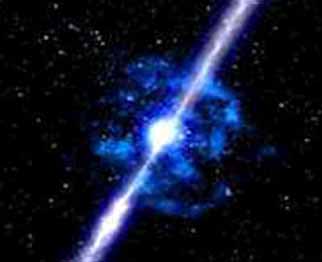

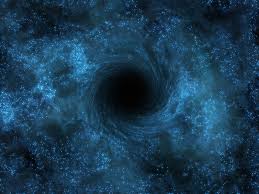


Subscrever:
Comentários (Atom)