Birth and Death of a Star
Astronomers think that a star begins to form as a dense cloud of gas in the arms of spiral galaxies. Individual hydrogen atoms fall with increasing speed and energy toward the center of the cloud under the force of the star's gravity. The increase in energy heats the gas. When this process has continued for some millions of years, the temperature reaches about 20 million degrees Fahrenheit. At this temperature, the hydrogen within the star ignites and burns in a continuing series of nuclear reactions. The onset of these reactions marks the birth of a star.
When a star begins to exhaust its hydrogen supply, its life nears an end. The first sign of a star's old age is a swelling and reddening of its outer regions. Such an aging, swollen star is called a red giant. The Sun, a middle-aged star, will probably swell to a red giant in 5 billion years, vaporizing Earth and any creatures that may be on its surface. When all its fuel has been exhausted, a star cannot generate sufficient pressure at its center to balance the crushing force of gravity. The star collapses under the force of its own weight; if it is a small star, it collapses gently and remains collapsed. Such a collapsed star, at its life's end, is called a white dwarf. The Sun will probably end its life in this way. A different fate awaits a large star. Its final collapse generates a violent explosion, blowing the innards of the star out into space. There, the materials of the exploded star mix with the primeval hydrogen of the universe. Later in the history of the galaxy, other stars are formed out of this mixture. The Sun is one of these stars. It contains the debris of countless other stars that exploded before the Sun was born.
In 2006, astronomers were excited about star formation in Arp 220, a super galaxy created by the collision of two other galaxies 250 million light-years from Earth. The Hubble Space Telescope has observed more than 200 huge star clusters, giving scientists a glimpse of what occurred when the universe was young. A surprising find was that the mix of gas and dust in this new galaxy is very similar to our own older Milky Way.
Read more: Birth and Death of a Star — Infoplease.com http://www.infoplease.com/ipa/A0004429.html#ixzz15vZxTTPa
The Birth of a Star

Picture a huge dark cloud made up of gas and dust (a nebula)
in space. When a nearby star explodes, a shock wave travels through the
cloud. The cloud begins to shrink and divide into even smaller swirling
clouds. As the cloud collapses, energy is released, which causes it to
heat up. The centre of the cloud, called the prostar, gets hotter and hotter
to about 10 million degrees or more until it ignites and a new star is
born.
in space. When a nearby star explodes, a shock wave travels through the
cloud. The cloud begins to shrink and divide into even smaller swirling
clouds. As the cloud collapses, energy is released, which causes it to
heat up. The centre of the cloud, called the prostar, gets hotter and hotter
to about 10 million degrees or more until it ignites and a new star is
born.
Most of the gas in interstellar clouds is hydrogen. And
at such high temperatures, the hydrogen atoms start to combine, or fuse
together. This fusion reaction produces enormous amounts of energy as light,
heat and other radiation. When this happens, the collapsing cloud starts
to shine as a star.
at such high temperatures, the hydrogen atoms start to combine, or fuse
together. This fusion reaction produces enormous amounts of energy as light,
heat and other radiation. When this happens, the collapsing cloud starts
to shine as a star.
The outward "pressure" of the radiation coming from the
core of the new star acts against the matter that is collapsing under gravity.
Eventually the two balance each other, and the collapse ceases. The star
settles down and begins to shine steadily. It takes a star the size of
the Sun about 50 million years to reach this state.
core of the new star acts against the matter that is collapsing under gravity.
Eventually the two balance each other, and the collapse ceases. The star
settles down and begins to shine steadily. It takes a star the size of
the Sun about 50 million years to reach this state.
The hottest stars are blue-white in colour and burn their
hydrogen fuel very quickly. The Sun, a small yellow star, burns hydrogen
more steadily. Proxima Centauri, the closest star to the Sun, burns its
gas very slowly and is a cool, red star. The speed at which the stars burn
hydrogen determines how long they will live.
hydrogen fuel very quickly. The Sun, a small yellow star, burns hydrogen
more steadily. Proxima Centauri, the closest star to the Sun, burns its
gas very slowly and is a cool, red star. The speed at which the stars burn
hydrogen determines how long they will live.
A Sun-sized star shines steadily for about 10,000 million
years, until the hydrogen fuel in its core is used up. The star then begins
to collapse again under gravity. The heat triggers off hydrogen fusion
in the gassy shell surrounding the core. The shell heats up, causing the
star to expand and brighten. But the core continues to shrink and get hotter.
years, until the hydrogen fuel in its core is used up. The star then begins
to collapse again under gravity. The heat triggers off hydrogen fusion
in the gassy shell surrounding the core. The shell heats up, causing the
star to expand and brighten. But the core continues to shrink and get hotter.
Blue giants have a short life, and explode dramatically.
The Sun will continue to burn for another 5 billion years. Then it will
expand into a large red giant and finally shrink to a white dwarf. Proxima
Centauri, however, will remain unchanged for tens of billions of years.
The Sun will continue to burn for another 5 billion years. Then it will
expand into a large red giant and finally shrink to a white dwarf. Proxima
Centauri, however, will remain unchanged for tens of billions of years.
How Does a Star Die?
Posted in: Astronomy by Fraser Cain (2 Comments »)

So a star has reached middle age by fusing hydrogen into helium. Then what happens? Once a star has run out of usable hydrogen that it can convert into helium, a star then takes one of several paths.
If the star is 0.5 solar masses (half the mass of our sun), electron degeneracy pressure will prevent the star from collapsing in upon itself. Due to the age of the universe, scientists can only use computer modeling to predict what will happen to such a star. Once it has finished its active phase (hydrogen to helium), it becomes a white dwarf.
A white dwarf can come about in one of two ways; first, if the star is very small, electron degeneracy pressure simply stops the collapse of the star, it is out of hydrogen, and it becomes a white dwarf. Secondly, and more commonly, the core of the star can still be surrounded by some layers of hydrogen, which continue to fuse and cause the star to expand, becoming a red giant.
A red giant is a star in the process of fusing helium to form carbon and oxygen. If there is insufficient energy to make this happen, the outer shell of the star will shed leaving behind an inert core or oxygen and carbon – a remnant white dwarf. If enough energy is involved in the casting off of stellar casings, a nebula can form. If said white dwarf is in a binary system, it could become a type 1A supernova, but this is very rare. Instead, it is thought that a white dwarf will eventually cool to become a black dwarf – in theory because there are no white dwarfs older than the universe, black dwarfs are theoretical only because there hasn’t been enough time for one to form.
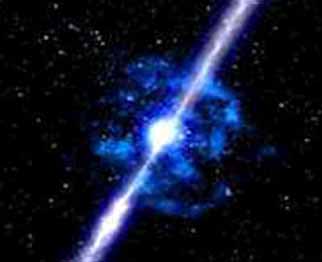
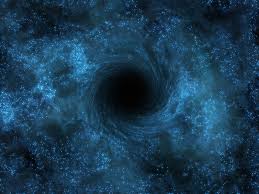
If a star that has reached the end of its productive phase is below the Chandrasekhar Limit – 1.4 times the mass of our Sun – it will become a white dwarf; over this limit, it will become a neutron star. If a star is larger than about 5 times the mass of the sun, when the hydrogen fusing stops, a supernova will take place and the rest of the material will condense into a black hole.
Stars expand as they grow old. As their core runs out of hydrogen and then helium, the core contacts and the outer layers expand, cool, and become less bright. This is a red giant or a red super giant (depending on the initial mass of the star). It will eventually collapse and explode. A star's life span and eventual fate are determined by the original mass of the star.
Life span:
The most massive stars have the shortest lives. Stars that are 25 to 50 times that of the Sun live for only a few million years. They die so quickly because they burn massive amounts of nuclear fuel.
The most massive stars have the shortest lives. Stars that are 25 to 50 times that of the Sun live for only a few million years. They die so quickly because they burn massive amounts of nuclear fuel.
Stars like our Sun live for about 10 billion years. Stars less massive than the Sun have even longer life spans.
Fate of a Star:
A star will become either a black dwarf, neutron star, or black hole, depending on how massive it was. .
A star will become either a black dwarf, neutron star, or black hole, depending on how massive it was. .
Sun-like Stars (Mass under 1.5 times the mass of the Sun) --> Red Giant --> Planetary Nebula -->White Dwarf --> Black Dwarf
Huge Stars (Mass between 1.5 to 3 times the mass of the Sun) --> Red SuperGiant --> Supernova --> Neutron Star
Giant Stars (Mass over 3 times the mass of the Sun) --> Red SuperGiant --> Supernova --> Black Hole
EVOLVED STAR
An evolved star is an old star that is near the end of its existence. Its nuclear fuel is mostly gone. The star loses mass from its surface, producing a stellar wind (gas that is ejected from the surface of a star). Older stars produce more stellar wind than younger stars.
Sun-sized Stars

Stars smaller than the Sun (Brown Dwarf)
 | The Nebula A huge cloud of hydrogen, helium and microscopic dust. |
 | 1/20 Solar mass star The dust and gas collapse and forms a star. |
| Brown Dwarf Star The star never shines brightly. |



Sem comentários:
Enviar um comentário